The Tour de France: More Than Just a Bike Race

The Tour de France is the biggest cycling race in the world.
In France alone, Le Tour averages a 36% TV audience share during the race, making it the most-watched program every afternoon across the three weeks. On certain stages, like Bastille Day, this climbs to 58%. In other cycling heartlands like the Benelux, audience share is also regularly over 50%. Globally, the race reaches more than 150 million people through a mix of subscription and free-to-air distribution.

Understanding the Event
The iconic three-week race is a brutal test of body and mind. Success demands preparation, precision, tactical awareness, luck and raw ability – without all of them, podium hopes are dashed. Winning the Yellow Jersey? Harder still.
The 2026 edition began with 184 riders across 23 teams. Each team has specialists with specific roles, and every stage has its own demands. Chances of victory are slim.
Seven flat stages favour sprinters with raw power and high anaerobic capacity. Eight mountain stages suit climbers with world-class power-to-weight ratios and lung capacity. Two time-trials – one individual and one team – are likely decided by a handful of riders with unique ability and power output. That leaves just four remaining unpredictable stages.
Add in generational talents like Tadej Pogačar (World Champion and four-time Tour winner), Jonas Vingegaard (two-time Tour winner) and Remco Evenepoel (two-time Olympic and World Champion), and opportunities shrink further. French prodigy Paul Seixas adds another compelling dimension for fans.
The Irish rider Ben Healy from the only US team, EF Education Pro Cycling, claimed his first Tour stage win on a hilly stage in 2025. His team’s encyclopaedic knowledge of the Norman hills ensured Healy’s attack was clinical and precise. Healy didn’t just rely on raw strength and willpower; however crucial they were. He adjusted his race radio to reduce aerodynamic drag, wore a faster (if less comfortable) helmet, and was cooled with dry ice bottles as temperatures climbed above 30°C. Meticulous preparation met perfect execution.
Four and a half hours of racing ended with Healy crossing the Stage 6 finish line alone and victorious. For his team, that one win defined their Tour – even with two weeks still to race.

The Viewing Experience
Watching the Tour, as with all sports, is about learning the subtleties – the teams, tactics, personalities and history. But Tour de France coverage isn’t a 90-minute, adrenaline-fuelled burst. It’s not football, rugby, T20 cricket or boxing.There are blockbuster stages – prestigious mountain showdowns where the contenders for yellow ride battle pedal stroke for pedal stroke, leaving the rest of the field scattered behind. These battles are often the culmination of hours of attrition, as teammates set an unforgiving pace before being dropped one by one.
Sprint stages, by contrast, deliver the most explosive drama. Riders hit over 70 km/h, legs churning out almost 2,000 watts in a fight for position and glory. Sharp elbows, hair-raising crashes and photo finishes make for thrilling – if brief – finales.

Beyond Two Wheels
But the joy of watching the Tour isn’t just those decisive moments.
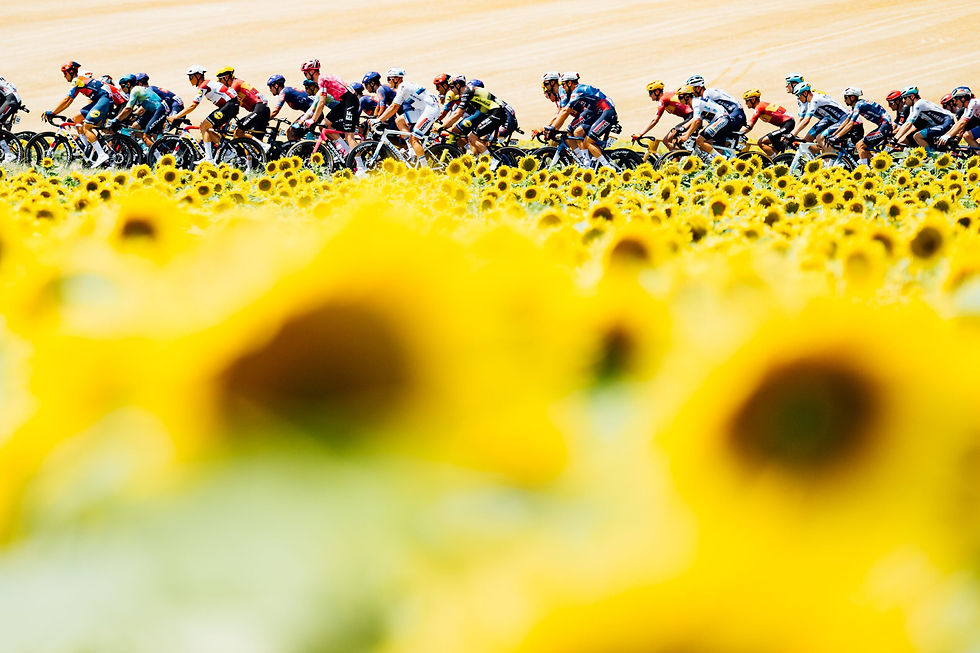
Much like in golf or cricket, there’s beauty in the quieter spells – the long camera shots across valleys and vineyards, the space for commentators to tell stories beyond the race itself.
People debate the world’s most beautiful sporting venues – Wembley, Maracanã, Centre Court, Lord’s, the MCG, Fenway Park. For cycling fans, few settings rival the French Alps, the rolling hills of the Dordogne, or the sunflower-lined roads near Carcassonne.
It’s not just scenery. It’s a journey through culture, cuisine and history. Listen to the dulcet tones of Rob Hatch or Ned Boulting discuss the flags of Normandy or the conquests of Gascony; hear them explain the architecture of 17th-century castles or the nuances of local cheese-making.
Alongside them, former pros drop in the insights only riders know – who’s fuelling, who’s fading, what conversations are happening in the bunch, and where the next decisive moments will come.
Then there are the radios – crackling instructions from the Directeur Sportif in the team cars, stacked with spare wheels and strategy. Or the camera cuts to Jens Voigt, once a Tour stage winner himself, now leading the riders on a motorbike, offering his own tactical reads on the unfolding race.
A Different Kind of Drama
From a commercial perspective, all of this creates authentic opportunities for brands – woven naturally into the sport’s culture, landscape and rhythm.
And for viewers? Few sports invite quiet attention like the Tour. Let it roll on in the background, and you’ll find yourself drawn into a journey of landscapes, history, strategy and human endurance – a sporting experience unlike anything else.